战狼2
CCTV 직접 확보하라"…경찰 불신에 '실종신고 십계명' 확산_我的网站

一 | The year 2026 marks the 70th anniversary of the establishment of diplomatic relations between China and Egypt, as well as the 70th anniversary of diplomatic relations between China and Arab states.
A recent survey on "How Chinese people view Egypt" conducted by the Global Times Institute found that Egypt's ancient civilization has left a deep impression on the Chinese public.
Most respondents view Egypt as a friendly country or strategic partner, hold optimistic expectations for the future development of China-Egypt relations and strongly support deeper cooperation. Chinese and Egyptian experts said that Chinese people's favorable impressions of Egypt are rooted in both historical and current factors.
The mutual respect and appreciation between China and Egypt for each other's civilizations and cultures, as well as practical cooperation between the two countries in various fields, have promoted the development of China-Egypt relations and shaped positive views of Egypt among Chinese people.
The survey was conducted from July 16 to 28 among ordinary people aged 18 to 69 across 31 provincial-level regions.
A total of 1,845 valid questionnaires were collected, with sample support provided by professional market research company DATA 100.
The data was weighted based on the gender and age structure of internet users in the 57th Statistical Report on China's Internet Development released by the China Internet Network Information Center in February 2026.
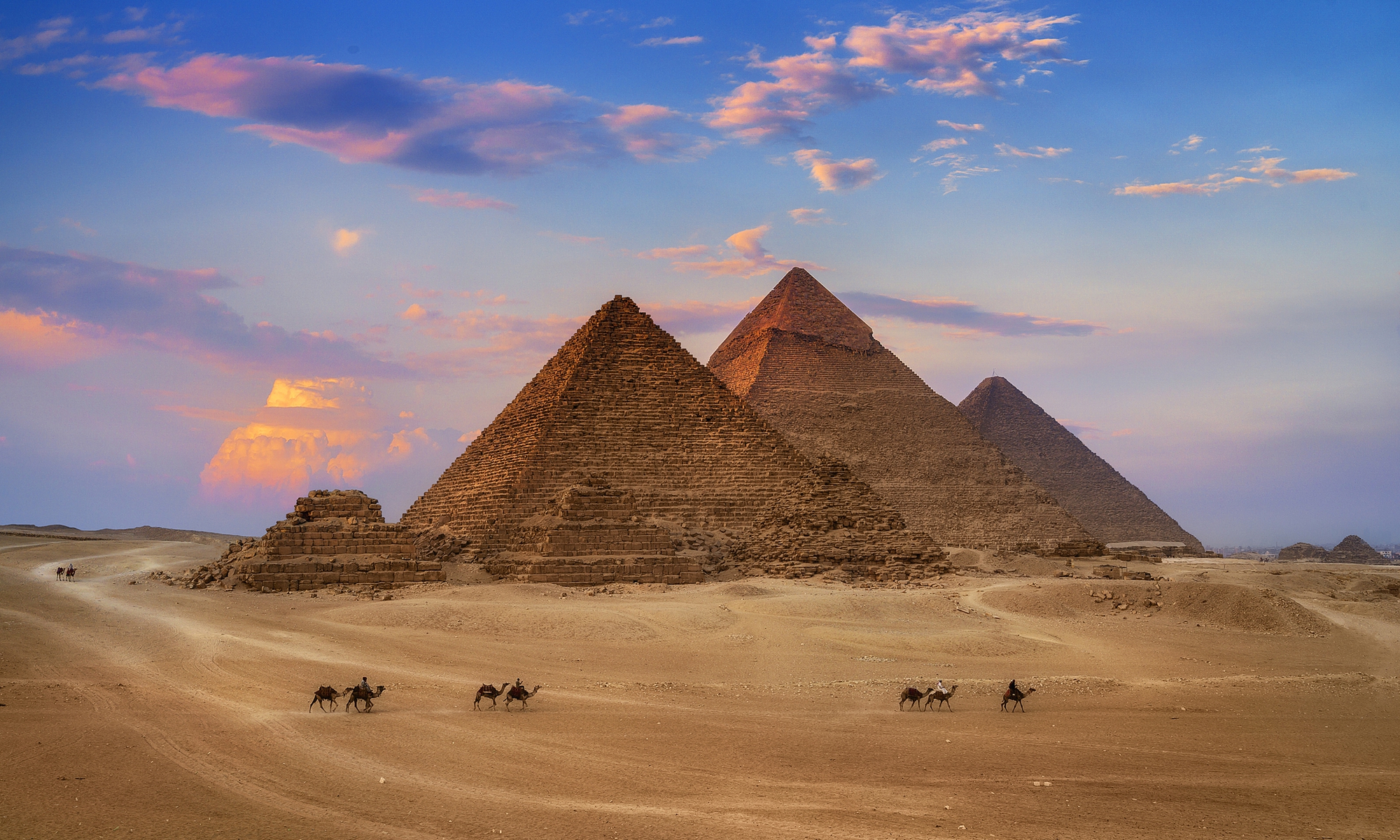
The landmarks in Egypt Photos: VCG
Impressive civilization
China-Egypt exchanges and cooperation have been active in multiple fields. In recent years, the two countries have held a variety of events, including cultural weeks, film festivals, cultural relic exhibitions and photo exhibitions, expanding people-to-people and cultural exchanges that have been warmly welcomed by people from both countries.
Survey data shows that 85 percent of Chinese respondents have some degree of understanding of Egypt, including about 40 percent who are "very familiar" or "relatively familiar" with Egypt, while more than 40 percent have some basic knowledge of the country. The Global Times Institute conducted an in-depth study of the 1,845 respondents who had knowledge of Egypt.
China and Egypt are both among the world's four ancient civilizations. Egypt's ancient civilization heritage has left the deepest impression on Chinese respondents. When mentioning Egypt, 66 percent of respondents first thought of iconic elements of ancient civilization such as the pyramids, pharaohs, mummies and the Sphinx, while 39 percent associated Egypt with its status as an ancient civilization. Some respondents also thought of natural landscapes such as the Nile River (30 percent), the Suez Canal (20 percent), and the Red Sea/the Mediterranean Sea (8 percent).
Egypt is not only a member of the African Union (AU), but also a founding member of the UN and holds other important international identities. In 2024, it officially joined the BRICS cooperation mechanism.
Regarding Egypt's multiple international roles, nearly 80 percent of respondents were able to correctly identify at least one of them. Among these, respondents showed relatively high awareness of Egypt's role as a core leading country of the League of Arab States, a BRICS member and a major AU country, with recognition rates all exceeding 30 percent.
In addition, more than 20 percent of respondents recognized Egypt's identity as a full member of the Organization of Islamic Cooperation and as a member of the Global South. As a founding member of the Arab League, Egypt has in recent years actively participated in ceasefire mediation, humanitarian aid coordination and dialogue efforts on Middle East hotspot issues such as the Gaza situation. More than 60 percent of respondents recognized Egypt's positive role in these efforts.
Mira Ahmed, an Egyptian literary translator and a member of the World Council of Sinologists, told the Global Times that the high level of recognition of Egypt's ancient civilization among the Chinese public reflects the profound historical and cultural ties between the two countries.
Both countries possess ancient civilizations spanning thousands of years and have made important contributions to the development of human civilization. In addition, the Egyptian and Chinese peoples have long had an understanding of each other's civilizations, with ancient civilizations serving as a common language between the two peoples and an important window for learning about each other's history and culture.
Therefore, Chinese people's association of Egypt as "an ancient civilization" reflects the Chinese public's respect and admiration for the country's historical and cultural status.
Friendly country, strategic partnerChina and Egypt established diplomatic relations in 1956, with Egypt becoming the first Arab and African country to establish diplomatic ties with the People's Republic of China. Nearly 90 percent of respondents gave positive or neutral evaluations of current China-Egypt relations. Among them, 63 percent said China-Egypt relations are "very good" or "relatively good."
What kind of role does Egypt play for China in the eyes of the Chinese public? Data shows that more than 70 percent of respondents regard Egypt as a "friendly country" or "strategic partner." In December 2014, China and Egypt officially established a comprehensive strategic partnership, and nearly 90 percent of respondents agreed that this was important for China.
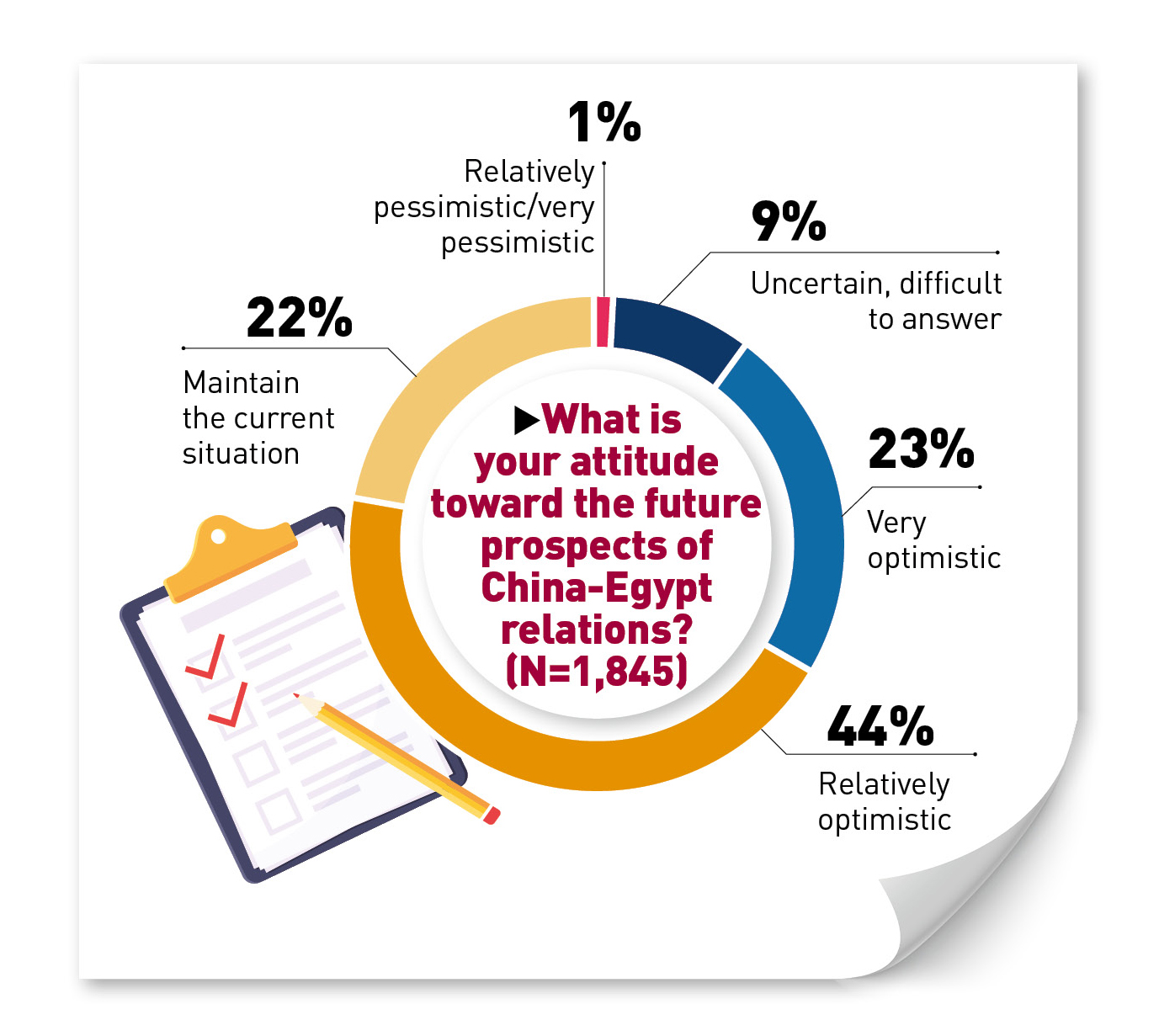
When asked about the future of China-Egypt relations, nearly 70 percent of respondents expressed optimistic expectations, while more than 20 percent believed the relationship would remain unchanged.
Liu Zhongmin, a professor at the Institute of Middle East Studies at Shanghai International Studies University, told the Global Times that Chinese people's favorable impression of Egypt has both historical and contemporary roots.
From a historical perspective, first, then Chinese Premier Zhou Enlai's extensive interactions with then Egyptian leader Gamal Abdel Nasser at the 1955 Bandung Conference helped eliminate misunderstandings among Arab countries about China. This contributed to Egypt becoming the first Arab country to establish diplomatic relations with the People's Republic of China in 1956 and also triggered the first wave of Arab countries to establish diplomatic relations with China. Second, during Egypt's struggle for rights over the Suez Canal, China provided substantial support for Egypt's pursuit of national independence, liberation and interests. Third, during the 1950s and 1960s, China and Egypt jointly opposed imperialism, colonialism and hegemonism, while participating in efforts to promote the rise of the Third World as a new force in international politics. Their historical interactions left a profound impression on both sides, forging a deep friendship between the two countries.
From a contemporary perspective, since the beginning of reform and opening-up, especially since the start of the new era, practical cooperation between China and Egypt in various fields has promoted the development of China-Egypt relations and shaped positive views of Egypt among the Chinese public, Liu said.
Mira Ahmed pointed out that Chinese people's favorable impression of Egypt generally reflects the positive development of China-Egypt relations. The relationship between the two countries is not limited to political and economic fields, but also covers culture, education, tourism and people-to-people exchanges. Most importantly, both sides hold mutual respect and appreciation for each other's civilizations and cultures, laying a solid foundation for the continued development of bilateral relations in the future.
Pragmatic and diversified cooperation Since the beginning of 2026, China and Egypt have signed and implemented a number of industrial parks, and cooperation has accelerated its expansion into new energy. Concrete results have also been achieved in areas such as the automotive industry, finance and currency, urban infrastructure, and cultural heritage and archaeology.
More than 80 percent of respondents have some knowledge of China-Egypt cooperation. Among various cooperation frameworks and projects, more than half of respondents are aware of Egypt's participation in the Belt and Road Initiative, and 32 percent of respondents know about Chinese-built infrastructure projects in Egypt such as light rail and roads. In addition, some respondents are also aware of China-Egypt cooperation in the cultural sphere, such as Confucius Institutes, as well as the production and sales cooperation of Chinese-brand mobile phones, home appliances and automobiles in Egypt.
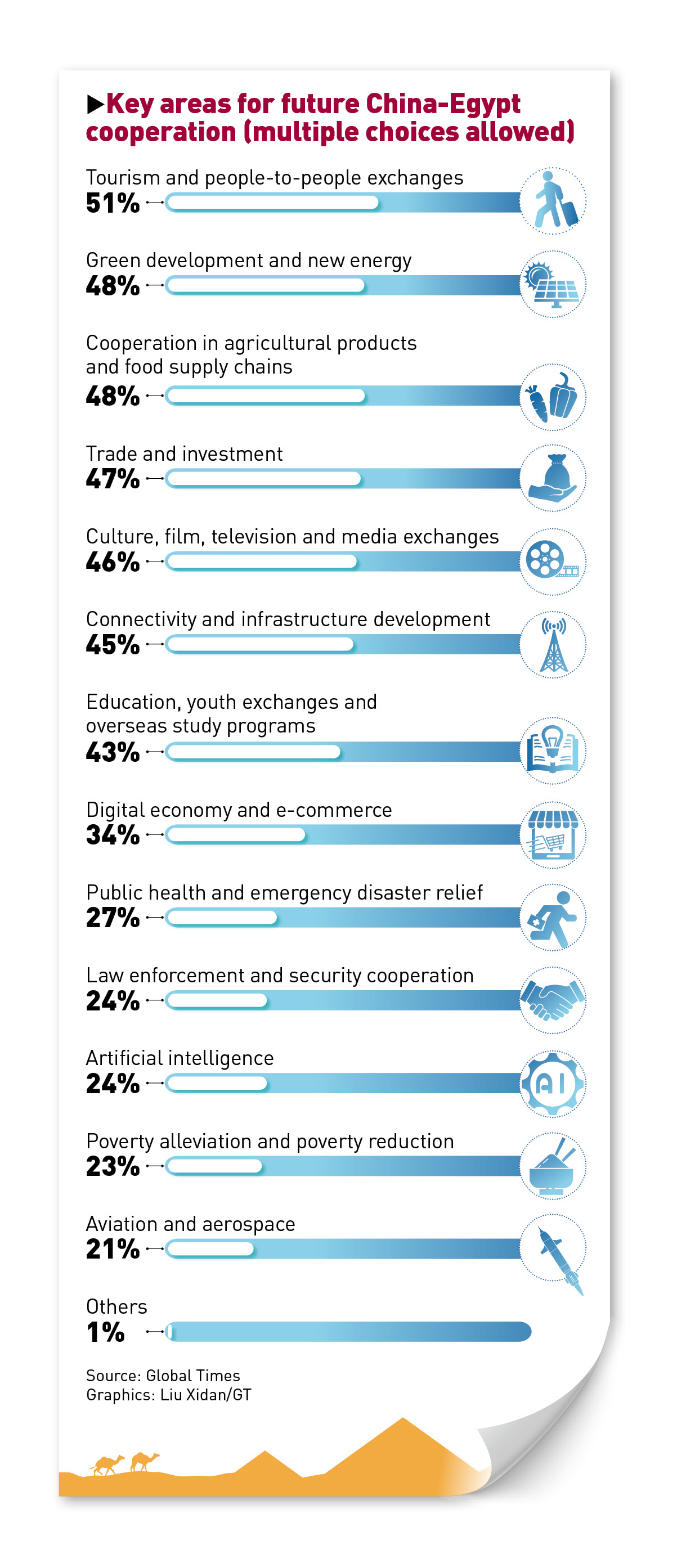
More than 80 percent of respondents believe that, since the establishment of diplomatic relations, cooperation between the two countries has been effective. Moreover, 99 percent of respondents believe that China and Egypt should further deepen cooperation in the future, including in tourism and people-to-people exchanges, green development and new energy, agricultural products, food supply chains, economy and trade, and investment.
More than 90 percent of respondents look forward to advancing cooperation in people-to-people and social exchanges between the two countries in the future. When asked, "If Egypt introduces more convenient Chinese-language services and payment methods for Chinese tourists, would you increase your willingness to travel to Egypt?" more than 70 percent of respondents answered affirmatively. At the same time, more than 70 percent of respondents welcome more Egyptian people to come to China for tourism, study or business activities.
Mira Ahmed said that in recent years, Egypt has taken multiple measures to facilitate Chinese tourists' visits to Egypt, including simplifying visa procedures, developing electronic services, stepping up publicity of Egypt as a Chinese tourist destination and cooperating with Chinese tourism enterprises. Egypt is also working to improve tourism services and infrastructure to provide a safer and more comfortable environment for visitors.
Mira Ahmed believes that the poll results reflect that China-Egypt cooperation has become pragmatic and diversified, transcending purely political or diplomatic relations. "I believe one of the most important features of this cooperation is complementarity. Egypt and China both possess capabilities and expertise that can complement each other, thereby opening up broad prospects for deeper and more sustainable cooperation in the future."
Future cooperation in global governance expectedIn recent years, the international situation has been changing rapidly, with conflicts in the Middle East and prominent problems in global supply chains. As a country in a conflict region, Egypt has actively mediated to help de-escalate the situation. China has actively promoted peace talks and facilitated world peace and development.
More than 90 percent of respondents believe that China and Egypt need to cooperate in the field of global governance in the future. Among them, the largest proportion of respondents (37 percent) look forward to China and Egypt jointly safeguarding the security of shipping in the Red Sea and the Suez Canal. Thirty-five percent of respondents hope that China and Egypt will work together to maintain security and stability in the Middle East and jointly promote the peaceful resolution of the Palestine-Israel issue and the Iran-Israel issue.
Furthermore, 33 percent of respondents hope that China and Egypt will jointly speak up for the Global South on platforms such as BRICS and the UN, and 31 percent of respondents look forward to China and Egypt jointly participating in global poverty reduction in the future.
Liu believes that China and Egypt, both being Global South countries, can cooperate at multiple levels in the field of global governance. First is cooperation between China and the Arab world, particularly within the framework of the China-Arab States Cooperation Forum mechanism, across political, economic, cultural and other fields.
Second, Egypt, the United Arab Emirates and Iran are Global South countries in the Middle East that have joined the BRICS cooperation mechanism in recent years. China and these Middle Eastern countries under the BRICS mechanism all have extensive space for cooperation.
Third, within multilateral mechanisms, including the UN, Egypt is an important partner for China in further solidifying and deepening the implementation of the four global initiatives worldwide. In addition, in the fields of peace, security, development and governance in the Middle East, China and Egypt also have extensive room for cooperation.
China and Egypt should strengthen communication and coordination on hot issues in the Middle East and work to resolve issues related to security and development in the region, Liu said.
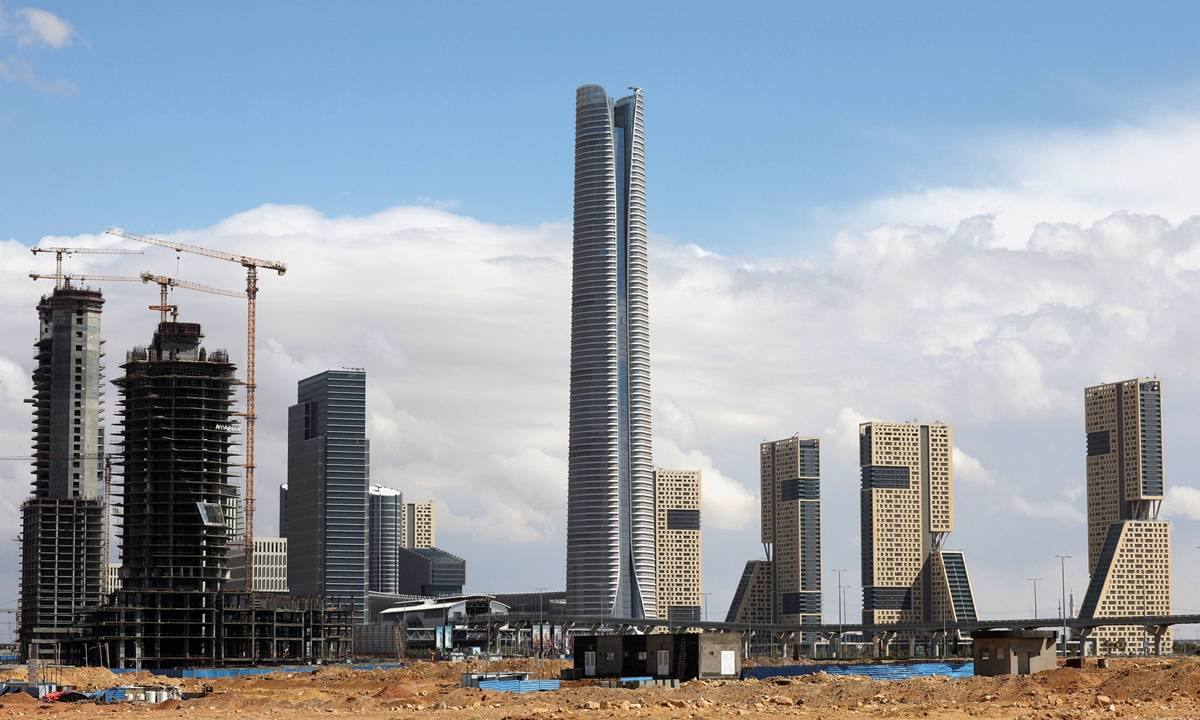 A construction site of the futuristic Iconic Tower, built by a Chinese company, in the Central Business District of Egypt's New Administrative Capital, east of Cairo, on March 25, 2026. Photo: IC
 。 [앵커]장윤기 사건에 이어 고 장미란 씨 사건으로 경찰에 대한 신뢰가 정말 바닥까지 떨어졌습니다. 국민 불신이 엄청나게 커지면서 인터넷에서는 이른바 '실종신고 십계명'까지 퍼지고 있습니다. 경찰만 믿었다간 가족을 찾을 기회를 놓칠 수 있으니 직접 CCTV를 확보하라는 지침도 그 중 하나인데, 시민들이 스스로 경찰 할 일까지 챙겨야하는 황당한 일이 현실이 됐습니다.안혜리 기자가 보도합니다. [리포트]최근 온라인에서 퍼지고 있는 '내 가족이 사라졌을 때 실종신고 필수 십계명'입니다.112신고 시각과 담당 경찰관의 소속과 이름을 기록하라고 주문합니다.주변 CCTV는 삭제되지 않도록 가족이 직접 가게 주인에게 보존을 요청하란 내용도 담겼습니다.장미란씨 실종 후 골든타임을 허비한 경찰에 대한 깊은 불신이 담겨 있습니다.또 경찰이 실종자와 "연락이 닿았다"고 설명할 경우엔 방식과 근거까지 확인하라고 조언합니다.최종찬 / SNS 이용자"저는 늘 어머니한테 말씀드리는 게, '만약 내가 사라지면 바로 탐정 찾아라. 3000만 원 정도 챙겨 가지고, 탐정 찾아가서 1000만원 쓰고, 건달들한테 한 1000만 원 쓰고 그게 조금 더 빠를 거다.'"소셜 미디어에는 "경찰만 믿고 기다리면 안 된다" "경찰과 통화할 땐 무조건 통화 녹음하기" "부모님 휴대전화에 자동녹음 기능 켜놓기"같은 가이드라인도 퍼지고 있습니다.이지현 / 경기 남양주시"불안하죠, 시민 입장에서는. 경찰인데 왜 우리가 우리 스스로의 안전을 위해서 대응법까지 찾아야 되는지가 저는 의문인 거죠."국민을 지키기는커녕 거짓말까지 한 일부 경찰관들을 보면서 시민들이 자구책을 마련해야 하는 어처구니없는 상황이 벌어지고 있습니다.TV조선 안혜리입니다.。
Current article:http://8i5c.nuotingqinbeimaeijin.cfd/list_frp/7htu.html
Published on:00:46:29